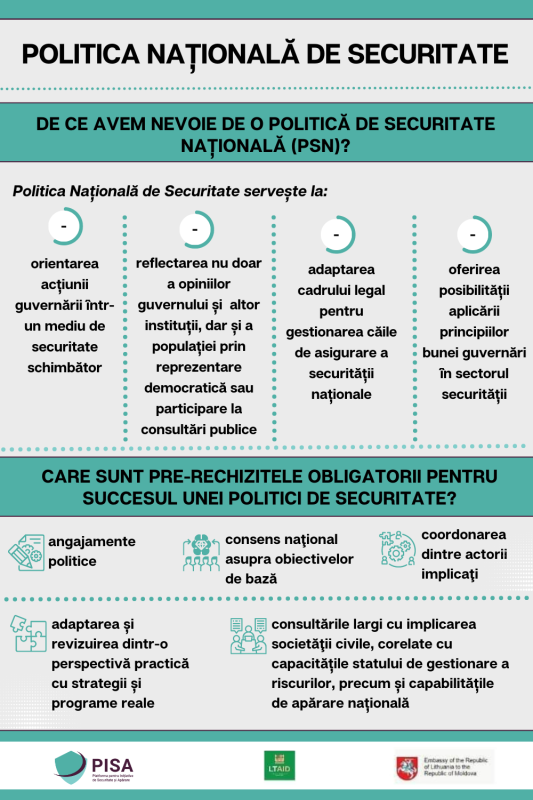
INFOGRAPHIC: Why do we need a national security policy?
Security policy is an extremely complex political process that must be placed in a specific national and regional context. Political commitments, national consensus on basic objectives, coordination between the actors involved, and broad consultations with the involvement of society—all of these are prerequisites for the success of a security policy. Thus, security policy can only be successful if there is a firm and continuous commitment at the national level, a process in which national and local authorities, the legislature, and civil society are actively involved. To a large extent, cooperation between state institutions and civil society explains the effectiveness of Western governments, which ensure: (-) civilian management and oversight mechanisms; (-) viable security agencies capable of providing security for individuals, communities, and the state; and (-) an institutional culture of security forces that supports the rule of law, good democratic practices, and the supremacy of civilian management and oversight agencies in the security sector. Thus, the PSN expands from a focus on protecting the stability of the state and the political regime to include aspects related to the well-being of the population and human rights.